Treat a pose as an option, not a prescription
A photograph of a deep stretch tells you little about the person's history, flexibility or comfort. Your version of a movement may look much smaller, and that can be entirely appropriate. The purpose of a gentle session is to explore comfortable movement, not to match the shape on a screen. If stiffness comes with pain, consider how long it has lasted and what else has changed.
People with a recent injury, osteoporosis, a history of fractures, surgery or an ongoing condition may need specific restrictions. A qualified instructor can help with general modifications, but a clinician should advise on medical limits. If a class description promises to correct a condition or remove pain, that promise is not a substitute for an assessment of your own symptoms.
Set up a quiet, supported practice space
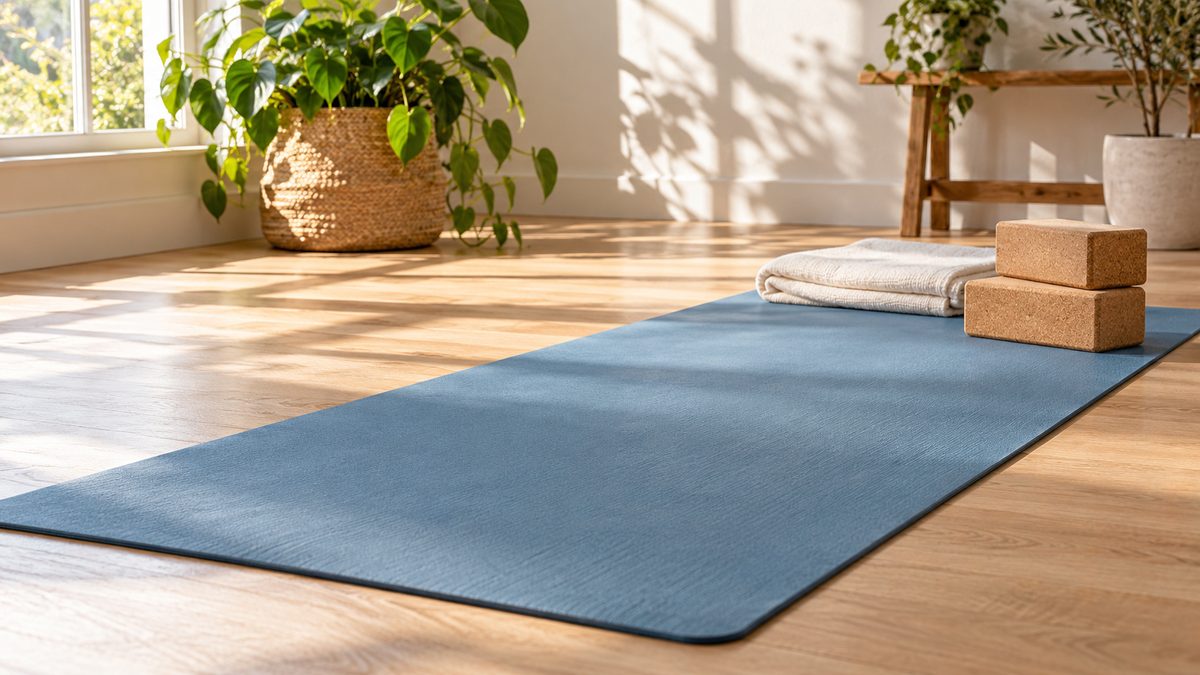
Use a surface that will not slide and leave enough room to move your arms without hitting furniture. Keep a stable chair nearby if getting down to the floor is uncertain. Cushions can make sitting or kneeling more comfortable, but avoid stacking unstable objects under your hands. Practise in clothing that allows you to breathe easily and move without catching a foot.
Begin with a few ordinary breaths in a comfortable seat. You might gently roll your shoulders or move your ankles while noticing how you feel. Do not hold a breath to force yourself deeper into a position. If you are already tired after a long commute or heavy workday, choose fewer movements. A calm, brief practice is easier to assess than a demanding sequence.
Explore a small seated movement
Sit near the front of a sturdy chair with both feet supported. Rest your hands on your thighs and slowly let your chest move a little forwards, then return to a comfortable middle position. You can also explore a small rounding movement if that feels pleasant. Keep the range modest and avoid dropping your head backwards to exaggerate the motion.
Some classes call similar movements seated cat and cow. The label matters less than your ability to move without strain. If either direction feels uncomfortable, leave it out rather than repeating it in the hope that discomfort will disappear. Our desk sitting guide provides ways to adjust the seat and foot support before you begin.
Modify common floor positions
On hands and knees, a gentle cat and cow movement involves slowly rounding and easing your back while staying within a comfortable range. Spread your weight comfortably across hands and knees, using suitable padding if needed. Wrist or knee discomfort may make a chair version a better choice. Do not repeatedly push to the end of your range just because the movement feels easy at first.
Child's pose often appears in stretching routines, but deep bending does not suit everyone. A supported forward reach towards a table may be more comfortable than folding your body towards the floor. Avoid forcing your hips towards your heels or asking another person to press you deeper. Pregnancy, recent surgery and some joint or bone conditions call for individual advice about positions.
Use breathing to pace a gentle session
Let a normal breath set the pace of a slow movement, without treating the breath as a performance target. If a pose makes breathing feel restricted, ease out and change the position. You should be able to leave the shape smoothly. A position that traps you or requires a sudden push to escape is too demanding for a quiet mobility session.
You can alternate a small movement with a comfortable pause. Notice the difference between mild stretch sensation and symptoms such as shooting pain, tingling or numbness. Those symptoms are reasons to stop and seek advice when needed. For other low-demand options during a workday, compare desk stretches for the lower back and upper back and neck movements.
Choose modifications before intensity
Use this checklist to decide if a class or home video fits your needs. You are allowed to skip a movement, leave a class early or ask for another position. Keeping control of those choices is part of practising sensibly.
- Can I enter and leave the position without help?
- Does the instructor offer a chair or supported version?
- Can I breathe comfortably throughout the movement?
- Do my medical circumstances require individual guidance?
- Am I free to stop before reaching a deep stretch?
When trying a class, explain your limits before the session begins and ask how modifications are offered. An instructor should allow you to rest without pressure to keep up. Be cautious about hands-on adjustments if you have not agreed to them or if they push you beyond comfort. At home, pause a video to set up properly rather than rushing into the next shape. A slower pace leaves more room to notice how the movement feels and decide what to leave out.
Keep yoga within a broader routine
A comfortable yoga session does not remove the need for regular changes of position, suitable strength work or enough rest. If you spend most of the day sitting, a brief walking routine may be as practical as adding another stretch. Pick activities you can repeat without creating a large time burden, and avoid judging the whole day by one session.
If stiffness is persistent, increasingly painful or interfering with sleep and usual tasks, discuss it with a doctor or physiotherapist. Seek urgent help for new bladder or bowel changes, saddle-area numbness or significant weakness. Our medical help guide explains those warning signs. Continuing a favourite pose should never take priority over checking a concerning change in symptoms.