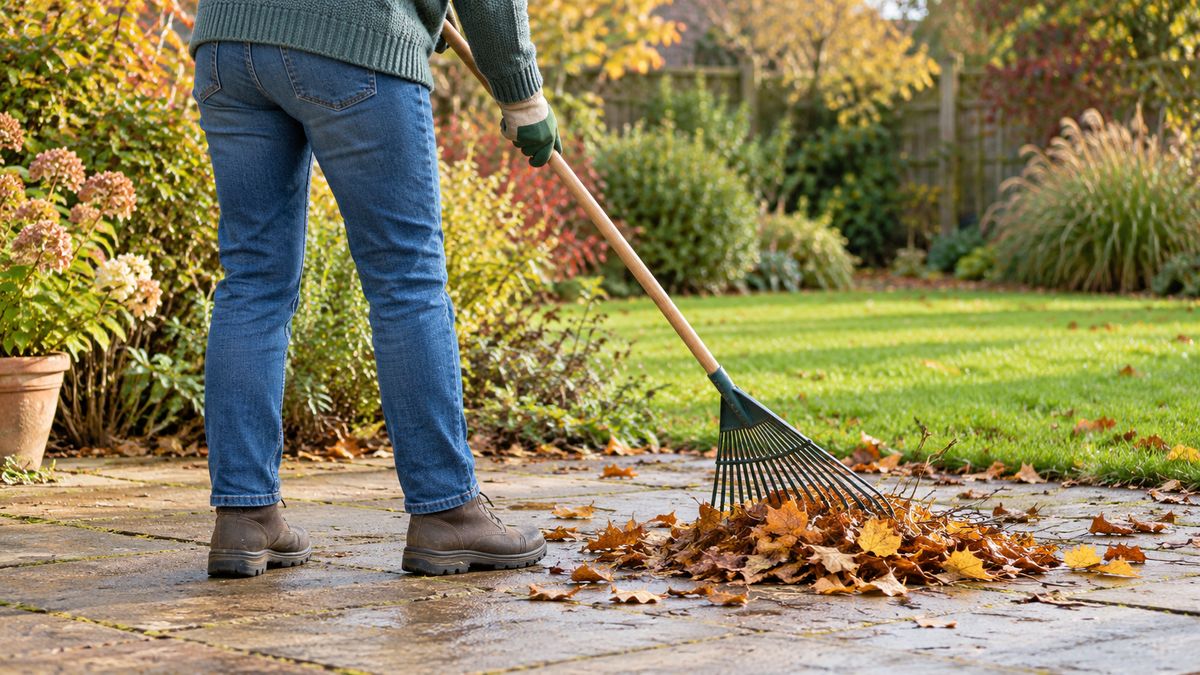
Clear storm debris only after conditions are safe, and start with small, loose material you can move comfortably. Keep each load close, turn by stepping and leave hanging branches, damaged trees, cables and unstable structures to professionals.
Storm Austen, the first named UK storm of the 2026-27 season, brought an amber wind warning for parts of south-west England on 23 October 2026. A garden can need attention afterwards, but the date on a warning does not establish that your own space is safe. Check current official weather advice before going outside.
Assess the garden before touching the debris
Look from a safe position first. Check overhead as well as underfoot: a branch caught in a tree may still fall, and a damaged fence can move unexpectedly. Keep away from leaning trees, split trunks, lifted roots and branches resting on buildings.
Treat any fallen or low-hanging cable as dangerous. Do not touch it, the object it rests on or nearby water. Keep others away and contact the electricity network operator or emergency services as appropriate. Do not try to establish for yourself that a cable is harmless.
Leave clearance involving floodwater, sewage, damaged roofs or suspect building materials to suitable professionals. A tidy lawn is not worth entering an uncertain area. If wind is still moving branches or making your footing unreliable, postpone the job.
Separate hand-sized litter from work needing help
| What you find | First decision | Reason to stop |
|---|---|---|
| Loose leaves on a clear path | Rake small sections into light loads | Sharp objects, slippery footing or hidden damage |
| Small detached twigs | Gather only what you can grip comfortably | Snagging, unexpected weight or sharp ends |
| A large or trapped branch | Keep clear and seek qualified help | Uncertain movement, stored tension or cutting required |
| Debris beside a damaged fence | Keep the area closed off | Loose panels, posts or overhead material |
A branch lying on the ground may be wedged under another object or bent under tension. Do not pull it to see what happens. Cutting fallen timber can release movement suddenly; this article is not instruction for chainsaw work or tree surgery.
Make a short route for light loads
Choose the collection point before filling anything. Clear a walking route with room to turn, and keep bags away from steps, gates and exits. Wear footwear with grip and suitable gloves for ordinary garden material, while remembering that gloves cannot make unknown debris safe.
Use smaller containers rather than filling a large sack because space remains. Wet leaves can be unexpectedly heavy, and a bag may be awkward to hold long before it looks full. Check the local authority's current garden-waste rules before mixing branches, soil or other material into a collection.
If you have a garden trolley, check its wheels, stability and load instructions. Keep the load low enough to see your route. Do not wheel a heavy load down a slippery slope or expect small wheels to cross a deep rut without resistance.
Change the task before fatigue changes your movement
- Start with easy movement. Walk around the safe area and move your shoulders and hips comfortably before lifting. Do not force stretches to prepare for a task that already feels too demanding.
- Work near your feet. Take short rake strokes and move along with the pile instead of reaching across a wide area. The advice on raking leaves with less back discomfort covers this repeated movement.
- Test a small load. Stand close, get a secure grip and bend through your hips and knees as comfortable. If the object resists or you need to jerk it, put it down and reassess.
- Face the destination. Carry close without blocking your view, then step round before lowering. Avoid twisting while holding a bag away from you. See planning an everyday lift for more detail.
- Pause between patches. Put the tool down, walk a little and check how you feel. Finish the session when your grip, balance or attention starts to fade.
There is no universal safe bag weight for every person and garden. Shape, grip, distance, ground conditions and your current capacity all matter. Several easy trips are a better choice than a single load you can barely control.
Leave a clear boundary around unfinished work
Stop after making an essential route safe; the whole garden does not need clearing at once. Keep pets and other people away from hazards still waiting for assessment. Do not pile branches against a damaged fence or block access needed by a contractor.
For future warnings, moving garden furniture before high winds explains how to plan earlier. It is not a reason to rush outdoors while dangerous weather continues.
When soreness needs medical attention
This is general information, not a diagnosis. If your back becomes sore, stop the demanding task and keep gently active as comfortable. Seek medical advice for persistent or worsening pain, fever, or new numbness or weakness. Pain after a substantial fall or impact also needs assessment.
New bladder or bowel problems, numbness around the genitals or bottom, or symptoms affecting both legs need emergency assessment. Chest pain or severe breathlessness during clearance also calls for urgent help. Read when back pain needs a doctor rather than assuming every symptom is a simple strain.
Frequently asked questions
Can I clear debris if I already have back pain?
Choose only light tasks you can do comfortably, or arrange help. Follow any existing clinical restrictions. If pain is new, worsening or affecting walking, get medical advice before attempting demanding clearance.
Do thick gloves make broken glass safe to pick up?
No. Gloves do not remove the risk from sharp or contaminated objects. Keep people away from the area and arrange suitable collection rather than reaching blindly into leaves or bags.
Can children help with the garden cleanup?
Keep children away until an adult has checked for sharp objects, damaged trees and unstable structures. Any later involvement should be limited to light, supervised tasks away from the clearance route.
What if a fallen branch crosses the pavement?
Do not step into traffic or cut it yourself to reopen the route. Keep clear and report the obstruction to the relevant local authority or property manager, using their official reporting instructions.