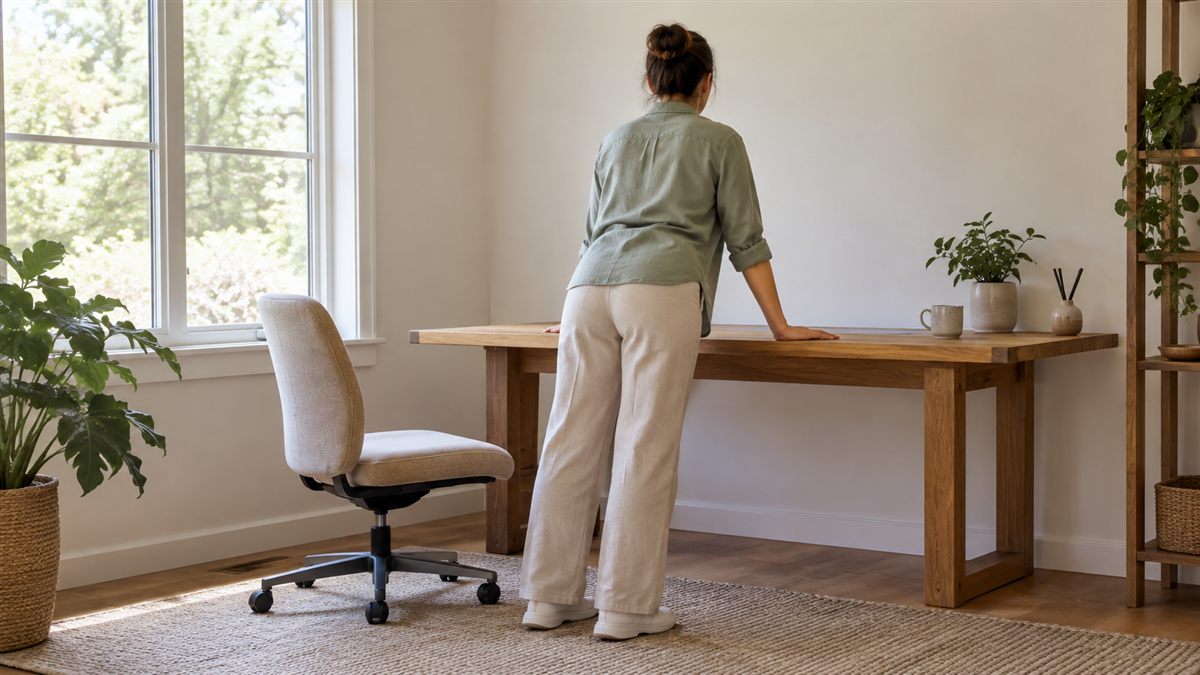
Desk stiffness can make a dramatic stretch tempting, but a smaller comfortable movement is often a more sensible starting point. These ten options introduce variety around sitting. They are general movement ideas, not a programme to diagnose or treat back pain.
Choose only movements you can perform easily. You may prefer two options followed by a walk rather than a full sequence. Keep breathing normally, use a stable support and stop if a movement causes sharp pain, symptoms travelling down a leg, numbness or dizziness.
Before trying the movements
Move away from sharp desk corners and clear enough floor space to stand safely. A chair on wheels may roll when you lean against it. For seated options, use a steady chair and place your feet securely on the floor.
Keep the first attempt small and slow. There is no requirement to reach a particular angle or hold a demanding position. If you have a recent injury, surgery, pregnancy related concerns or an existing condition, ask your clinician which movements suit you.
1. Small seated pelvic rocks
Sit with your feet supported and hands resting on your thighs. Gently tip your pelvis forward a little, then back a little, allowing your lower back to follow. Keep the motion easy rather than forcing a large arch. Return to a comfortable middle position between repetitions.
2. Seated forward hinge
Place your feet apart enough for balance and rest your hands on your thighs. Hinge slightly forwards from your hips while keeping the movement controlled. Come back upright using the same easy range. Skip this option if bending forwards increases your symptoms or your clinician has advised against it.
3. Comfortable seated turn
Keep both feet grounded and turn your chest gently towards one side. Let your eyes follow without yanking on the chair back. Return to the middle and try the other direction. A modest turn is enough; this is not a test of how far your spine can rotate.
4. Seated side reach
Rest one hand on the seat beside you and slide the other arm upwards only as far as comfortable. Make a small side bend without lifting your weight off the chair. Return slowly and change sides. Keep your shoulders easy and avoid pulling yourself farther with the supporting hand.
5. Standing weight shifts
Stand near a fixed surface with your feet comfortably apart. Shift some weight towards one foot, then towards the other, keeping both feet in contact with the floor. Use light hand support if needed. This offers movement without requiring a deep bend or a floor exercise.
6. Supported hip hinge
Face a stable desk and rest your hands lightly on it. Soften your knees and move your hips back a little as your torso inclines. Return to standing without jerking. Keep the desk close enough that you do not need to reach or place heavy weight through your arms.
7. Gentle standing back opening
Stand with comfortable balance and rest your hands at your hips. If this direction feels pleasant, make a very small backward movement through your trunk. Avoid throwing your head back or locking your knees. Leave it out if extension creates pinching, leg symptoms or any uncertainty.
8. Supported split stance
Hold a fixed surface and place one foot a short distance behind the other. Keep your trunk upright and shift forwards slightly until the front of the rear hip feels a mild stretch. Return before fatigue builds, then change sides. Shorten the stance if balance feels less secure.
9. Easy standing knee lift
With light support from a stable desk, lift one foot a small distance from the floor and lower it slowly. Alternate sides without leaning backwards. You do not need to draw the knee towards your chest. Skip this movement if standing on one leg is difficult or painful.
10. A short walking reset
Walk a clear route at an easy pace, letting your arms move naturally. A trip to another room can be sufficient for a brief pause. Walking adds a change of setting as well as movement. Read walking and back health for ideas about building a manageable routine.
Choose a small routine
- Start with one seated movement that feels easy.
- Stand up slowly and check your balance.
- Add one comfortable standing option with a fixed support nearby.
- Walk briefly when space and work allow.
- Return to the desk without trying to hold a corrected posture.
The movements should fit your day rather than become another demanding task. Repeating a comfortable option at natural work transitions may be more practical than saving every exercise for an elaborate lunchtime session. The sitting break guide helps identify useful cues.
If several options feel uncomfortable, do not keep testing them in search of one that forces the stiffness away. A simple change of task or short comfortable walk may suit the moment better. Make a note of movements that provoke symptoms and discuss them with a professional if needed. Individual guidance can be more useful than adding more stretches.
Address the setup as well as the stiffness
If your chair forces you to perch or your screen draws you forwards, stretching alone leaves those demands unchanged. Review feet, back support and keyboard reach using comfortable desk sitting. Adjust a single feature and notice how normal work feels afterwards.
Do not use stretching to keep working through steadily worsening pain. Seek medical or physiotherapy advice for persistent symptoms. Back pain with new weakness, numbness, fever or bladder and bowel changes needs prompt assessment, with urgent care for sudden bladder or bowel problems. A desk routine has clear limits.