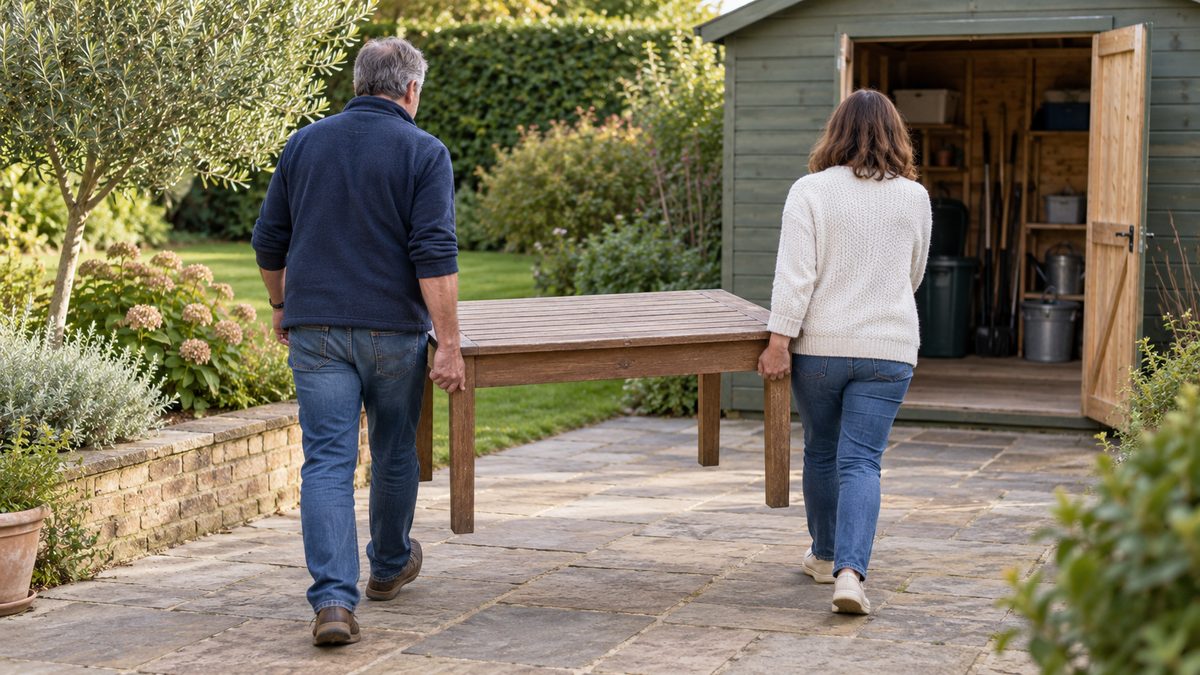
Move garden furniture before high winds arrive, while conditions are calm and you can control each item. Clear the route, arrange help for awkward pieces and follow the furniture instructions for storing, folding or securing them.
Storm Austen, the first named UK storm of the 2026-27 season, prompted an amber wind warning for parts of south-west England on 23 October 2026. Future warnings are a cue to plan early. They are not a reason to attempt a rushed lift once gusts are already moving objects.
Choose the destination before lifting a chair
Look at the route from the garden to the storage space. Measure a narrow doorway if the fit is uncertain, and check turns, thresholds and steps. An item that fits through a door may still be impossible to turn in the passage beyond it.
Clear the destination as well as the path. Avoid storing furniture in an entrance, shared corridor or emergency exit. Leave enough space to lower an item without reaching over another load. Check that the storage surface is stable and suitable for the weight.
Remove cushions and small loose accessories first so they do not fall while you carry the frame. Keep children and pets away from the moving route. Wear secure footwear and check that your hands can grip without sliding on wet surfaces.
Decide what can be folded or taken apart
Read the manufacturer's instructions before dismantling furniture. Remove only parts intended to come off, and keep the fittings together in a container. Support a tabletop or panel before releasing a fastening; do not assume it will remain balanced on its frame.
Fold chairs using the intended mechanism and keep fingers away from hinges. If a catch is jammed, stop rather than forcing it while bent over. Check that a folded item stays closed before moving it.
| Garden item | Preparation to consider | Handling concern |
|---|---|---|
| Folding chair | Remove loose cushions and fold as instructed | Pinch points and a frame that opens during carrying |
| Large dining table | Check for approved removable parts | Wide reach, hidden weight and a blocked view |
| Parasol and base | Close and separate only as instructed in calm weather | Wind catching the canopy and an unexpectedly heavy base |
| Glass-topped furniture | Consult its handling instructions | Fragile edges and panels that may lift separately |
| Large planter | Assess separately from lightweight furniture | Wet contents, poor handholds and breakable sides |
If you cannot establish how a glass panel or heavy base should be handled, arrange experienced help. Do not improvise a carry by gripping a fragile edge, a loose armrest or a decorative part.
Choose between carrying, wheeling and dragging
There is no single safe method for every patio. A light chair on a clear, level route may be straightforward to carry. A broad table that forces your arms apart may need help even if its material seems light. Size and grip matter alongside weight.
A suitable trolley can reduce carrying, provided its capacity, platform and wheels suit the item and ground. Read its instructions, secure the load as directed and keep your view clear. Do not use a household chair with castors as an improvised moving trolley.
Dragging can catch furniture feet on joints, gravel or grass and cause a sudden jerk. It can also damage the item. Use a suitable moving aid only where the furniture and surface allow it, with fingers and feet clear. If you have to lean hard, tug repeatedly or work backwards without seeing the route, stop.
For lifting, stand close, establish a firm grip and bend through your hips and knees within your comfortable range. Keep the item near you and step to turn. Our guide to lifting heavy things explains the planning checks behind a controlled move.
Agree a shared lift before anyone takes the weight
- Walk the route together. Decide who goes where and how the item will pass through each turn.
- Choose secure handholds. Both people need a dependable grip, room for their hands and a clear place to set down.
- Agree the signals. Pick one person to coordinate lifting and lowering, and agree that either person can call a stop.
- Move at a shared pace. Pause before thresholds and changes in direction, avoiding sudden pulls or twists.
- Lower together. Keep hands clear of the base and do not release until the item is supported.
Two people do not automatically make a difficult item safe. Different heights, limited grip or stairs can leave one person taking more weight. Get professional movers for pieces you cannot control, particularly where steps or fragile materials complicate the task.
If you are already tired from other preparation, split the work or change the plan. The household chores advice covers pacing repeated bending and carrying.
Secure what remains without creating another hazard
Use the furniture maker's recommended securing method and check current official local weather advice. Do not invent a wind-speed limit for your setup or assume that tying several chairs together makes them safe. Avoid makeshift anchors on a fence, railing or structure whose strength is unknown.
Do not climb onto furniture or use a ladder in rising winds to fasten a cover. If conditions deteriorate before you finish, get inside and leave the remaining items. After the storm, use the checks for clearing storm debris safely before returning to the garden.
Stop a move when pain changes your control
This is general handling guidance. Stop if you develop pain, lose your grip or cannot move steadily. Persistent or worsening back pain, new numbness, weakness or fever needs medical advice. Seek assessment after a significant fall or impact.
Back pain accompanied by new bladder or bowel problems, numbness around the genitals or bottom, or symptoms in both legs needs emergency assessment. Read when to seek medical help for back pain for the warning signs.
Frequently asked questions
Can I leave a heavy stone table outside?
Weight alone does not establish safety. Check the condition of the table, its surroundings and any installation instructions. Get qualified advice if moving or securing it needs equipment, structural fixings or uncertain lifting.
Will a cover keep furniture secure?
Do not assume so. A loose cover can catch wind. Follow the furniture and cover instructions, including any advice to remove the cover or store items before severe weather.
What should tenants do about shared outdoor furniture?
Contact the landlord or building manager early and agree responsibility and storage. Do not move communal items into escape routes or attach restraints to shared structures without an approved plan.
Should I secure furniture when the garden is wet but calm?
Assess the route as well as the wind. Slippery paving, soft ground or poor visibility may make the move unsafe. Wait for safer conditions if possible, or arrange suitable help before the weather deteriorates.