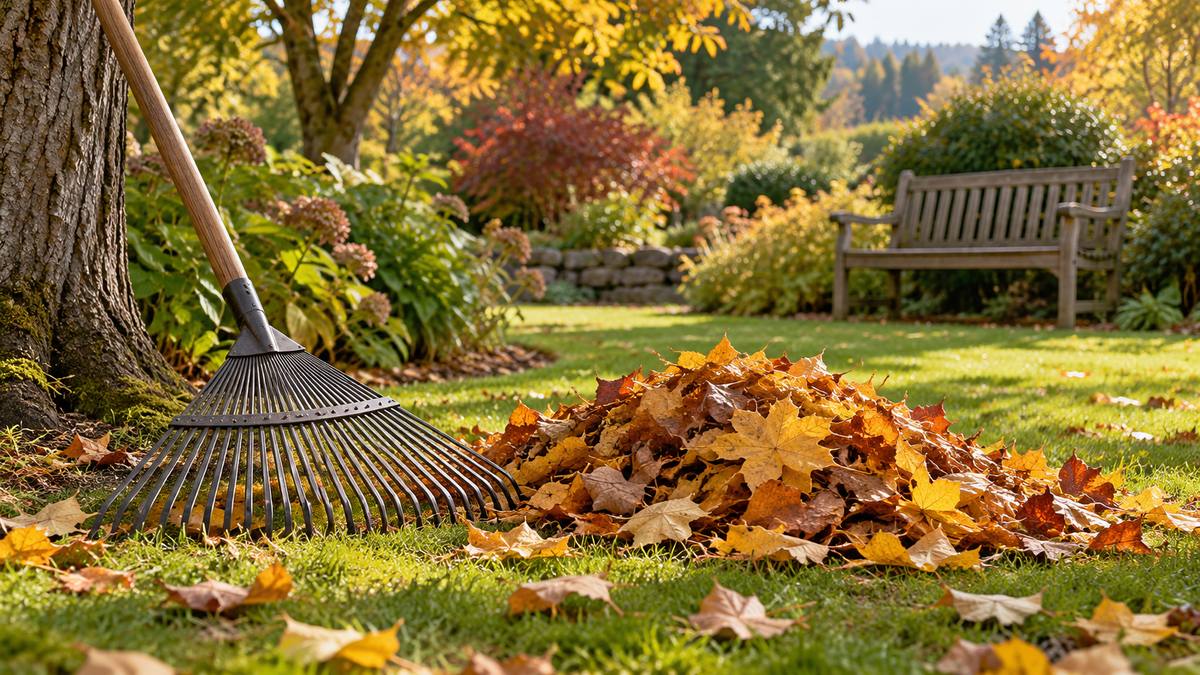
Raking leaves feels like light work, which is why it catches people out. An afternoon in the garden means hundreds of reaches, twists and bends, usually on the same side, and often after a week of sitting at a desk. The fix is not to avoid the job but to change how you move while you do it.
Get the set-up right
- Choose the right rake. A handle long enough for you to stand fairly upright, and a wide head so each stroke moves more leaves.
- Wear gloves and shoes with grip. Wet leaves are slippery, and gloves stop you gripping too tightly.
- Warm up. Walk around the garden for a few minutes and gently circle your shoulders and hips.
- Work with the wind. Raking in the direction the wind blows saves effort.
Use your legs, not your lower back
- Stand in a scissor stance: one foot in front of the other, knees soft.
- Pull the rake towards you with short strokes, shifting your weight from your front foot to your back foot.
- Keep the rake close. Long reaches far in front of you load the lower back.
- Move your feet to change direction instead of twisting from the waist.
- Switch sides every few minutes so both sides share the work.
Bagging and carrying
Picking up piles of leaves is the moment most people bend badly. Squat or kneel to gather leaves rather than folding forward, and use two boards or a leaf grabber to scoop them. Keep bags or tarps small enough to move easily; dragging a tarp across the lawn is easier than carrying a heavy bag. The same rules as lifting heavy things safely apply: load close to your body, bend your knees, no twisting while carrying.
Pace the job
| Habit | Why it helps |
|---|---|
| Break every 15 to 20 minutes | Lets tired muscles recover before they strain |
| Stand tall and stretch between sections | Undoes the forward lean of raking |
| Split a big garden over two days | Avoids one long, tiring session |
| Drink water | Physical work in cool weather still dehydrates you |
Afterwards
Change out of damp clothes, then keep moving gently. A short walk or the movements in our routine for a stiff back help more than slumping into a chair. Some next-day stiffness is common after unfamiliar work and usually eases with gentle activity.
For general guidance on looking after your back, see the NHS back pain page, and read when to see a doctor for back pain for the warning signs that need prompt attention.
A simple warm-up before you start
Five minutes of gentle movement makes the first strokes of the rake feel much easier, especially on a cold morning. None of these should hurt; keep every movement slow and comfortable.
- Walk the garden for two or three minutes, swinging your arms naturally.
- Shoulder rolls: roll both shoulders forwards ten times, then backwards ten times.
- Hip circles: hands on hips, draw slow circles with your hips in each direction.
- Gentle side reaches: reach one arm over your head towards the other side, then swap.
- Practise the stance: hold the rake, step into the scissor stance and shift your weight forwards and back a few times without raking.
If you have a back condition or are recovering from an injury, ask your doctor or physiotherapist which movements suit you before you start.
Sharing the job
Raking is easier with two people: one rakes while the other holds the bag open or drags the tarp, so nobody spends the whole afternoon bending. If you garden alone, break the work into zones, finish one zone, bag it and take a short break before starting the next. Swapping between raking, bagging and carrying changes the movements your back is doing, which is kinder than repeating one task for an hour.
Raking leaves in short
Pick a rake that fits your height, use a scissor stance, pull towards you with your legs, switch sides and move your feet to turn. Squat to bag leaves, keep loads small and take regular breaks. The leaves will wait; your back will thank you.