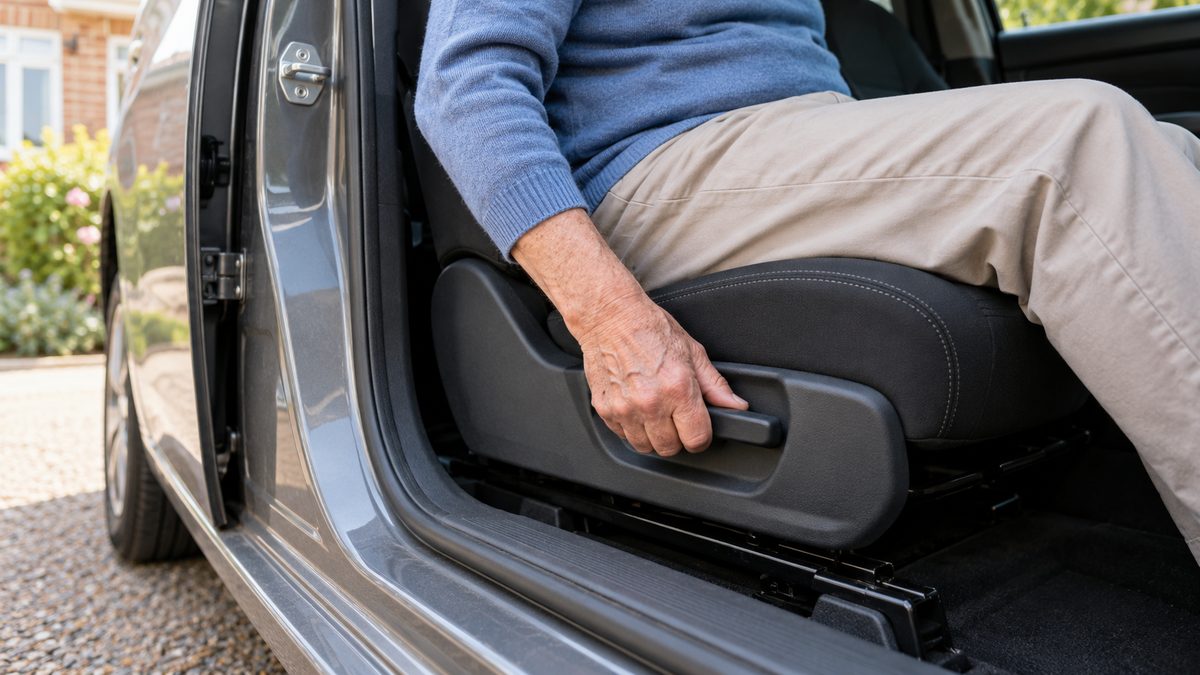
Older drivers can improve comfort by adjusting the seat while parked, checking easy access to the pedals and steering wheel, and planning breaks before stiffness becomes distracting. Adjust the mirrors after the seat, and follow medical advice about fitness to drive.
Age alone does not tell you which position will feel comfortable. Hip movement, neck rotation, eyesight and the shape of the car all matter. A comfortable seat also cannot establish that someone is safe to drive.
Set the driving position before turning the key
Park securely, apply the parking brake and leave enough time to make adjustments without traffic pressure. Remove a bulky wallet or other object from beneath you. Sit with your pelvis back on the seat and let the backrest support your trunk.
Move the seat so you can fully operate each pedal without stretching your leg straight or sliding forwards. Your knee should retain some bend. Check this with your usual driving shoes, since a different sole can change how the pedals feel.
Adjust the backrest so your shoulders can rest comfortably while your hands reach the steering wheel. Avoid reclining so far that you have to lift away from the seat to steer. Use the vehicle handbook for steering-wheel adjustment and airbag clearance, rather than guessing a universal distance.
Change seat height only while maintaining a clear view through the windscreen and enough room above your head. Adjust the head restraint according to the handbook. Check that the seat locks securely before moving on to mirrors.
Make a stationary check of reach and visibility
- Press the pedals through their required travel without lifting your hip or reaching with your toes.
- Check that you can steer and use essential controls without a long stretch.
- Set the mirrors from your settled driving position, following the vehicle instructions.
- Fasten the seat belt so it lies flat across the chest and low across the pelvis.
- Check that you can make the necessary observations comfortably before deciding to drive.
Mirrors do not remove the need for other observations. If you cannot turn enough to check safely, do not force your neck or assume another mirror solves the problem. Seek advice about your driving ability and any suitable assessment.
The car posture guide for longer drives explains how reach, support and journey planning work together. Make changes in the parked car and reassess them before setting off.
Support should not change pedal control or belt fit
If the seat has adjustable lower-back support, start with a modest setting. More pressure is not necessarily more comfortable. Reduce it if it pushes you forwards or makes you arch away from the backrest.
A loose cushion can shift your position, raise you unexpectedly or alter the seat belt path. Before adding anything, check the handbook and seek suitable advice if you need an adaptation. Keep all objects clear of pedals and seat mechanisms.
Do not use a cushion to compensate for numbness, leg weakness or difficulty operating a pedal. Those symptoms need assessment. Our page on lower-back support cushions discusses comfort checks, but driving adds control and restraint requirements.
Get in and out without a rushed twist
Choose a parking space that lets the door open far enough for you to move comfortably. Check the surface for a kerb, slope or wet leaves. Avoid squeezing through a narrow gap while holding bags.
If your mobility allows, stand with the seat behind you, lower yourself under control and then bring your legs into the footwell while turning your body together. Avoid planting one foot inside and twisting sharply as you drop into the seat.
To leave, park securely first. Turn towards the opening, bring your feet onto a stable surface and move towards the seat edge only as far as feels controlled. Lean forwards enough to rise through your legs, using a fixed support approved for that purpose if needed.
Do not pull on a moving door or put your weight on an uncertain fitting. If you need someone to lift you, struggle to stand or have surgical movement restrictions, ask a physiotherapist or occupational therapist for a tailored transfer method.
Build stops around the journey you can manage
Plan suitable stopping places before departure, particularly when toilets, parking or accessible paths may be hard to find. Leave time for a short walk and a comfortable change of position. There is no single break interval that suits every driver.
Take an earlier stop if stiffness or discomfort affects concentration. Never stretch, readjust the seat or reach behind you while the car is moving. If tiredness appears, stop somewhere safe and address it before deciding whether to continue.
Shorter stages and another qualified driver may make a trip more manageable. For everyday journeys, compare routes by how easily you can stop and park, rather than travel time alone. The guide to breaks from sitting offers ideas to use once safely parked.
Separate ordinary stiffness from a driving concern
Arrange medical advice for recurring pain, increasing difficulty turning, or symptoms that interfere with steering or braking. Check medicine instructions and ask a pharmacist or clinician about drowsiness, dizziness or other effects relevant to driving.
Stop driving if a symptom prevents safe control or attention. Follow your clinician's advice and check your local licensing authority for current fitness-to-drive requirements. These differ between countries and cannot be settled by a posture adjustment.
Back pain with new bladder or bowel changes, altered feeling around the genitals or bottom, or substantial new leg weakness needs emergency medical assessment. See the warning signs for back pain. This article provides general comfort guidance, not an assessment of driving fitness.
Further questions about driving comfort with age
Should I practise adjustments in a borrowed car?
Yes, while parked. Allow extra time to locate the seat controls, lights and other essentials. If the available adjustment does not let you operate the vehicle safely, choose a different travel arrangement.
Can a passenger remind me to stop?
Agree on stopping places before leaving. A passenger can help with planning and notice discomfort, but the driver remains responsible for stopping safely and deciding whether they can continue.
Is it better to keep my coat on while driving?
Choose clothing that allows free movement and correct seat belt fit. Remove a bulky coat while parked if it restricts reach or makes the belt sit poorly, then recheck the seat and mirrors.
What should I tell a clinician about driving discomfort?
Describe which action is difficult: pressing a pedal, checking behind, sitting or getting out. Explain when symptoms start, any numbness or weakness, and any medication changes. This gives more useful information than describing posture alone.