Cooking a large meal can feel easier on your back when you break up standing, prepare food at a comfortable height and reduce heavy carrying. Plan those changes before guests arrive, especially if your back is already sore.
There is no single cooking posture to maintain all afternoon. Chopping, washing, stirring and serving place different demands on you. A useful plan moves between those tasks and leaves space to sit, rather than expecting your body to tolerate an uninterrupted stretch at the counter.
Write the rest breaks into the menu
Choose dishes you can prepare in stages and identify which steps someone else can do. Washing vegetables, setting the table and carrying serving dishes are real parts of the workload. Share them before cooking starts so help does not depend on someone noticing you are struggling.
Use waiting periods for a change of position. While food cooks safely, sit for a drink or prepare labels for serving dishes. Keep any cooking that needs supervision within view and hearing. A break should not mean leaving a hot pan unattended when it needs watching.
Put the most demanding preparation earlier, when you have more energy. Leave an uncomplicated final stage for when guests arrive. If your plan requires repeated heavy transfers from hob to sink while other people crowd the kitchen, revise the menu or organise help.
Check your chopping height with an empty board
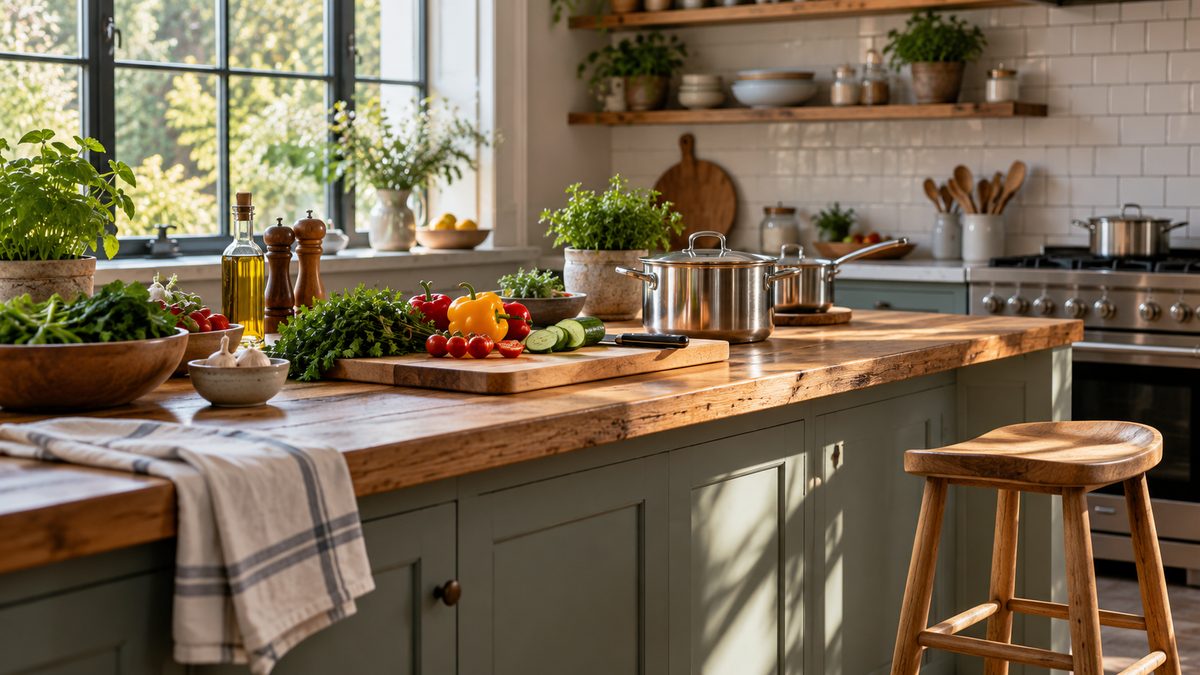
Stand where you intend to prepare food and let your shoulders relax. Your forearms should reach the board without a deep forward bend or raised shoulders. Bring ingredients towards the near part of the surface instead of working behind a row of bowls.
If a fixed counter is too low, use another stable preparation surface that suits you. If it is too high, do not compensate by standing on a loose step or mat. Seated preparation at a table may be more manageable, provided the chair, board and tools are stable.
Keep knees and feet clear of bags and storage boxes under the table. Sit close enough to the board to avoid a long reach. Switch to a different task if you start leaning heavily on one elbow or holding your head close to the knife to see.
Let your feet move during standing jobs
Secure, comfortable footwear makes more sense than shoes that slip at the heel or make you brace your toes. Keep the floor dry and remove loose rugs from busy routes. For more detail on fit and support, read footwear and posture.
Change your stance while stirring or washing. Move closer to the sink rather than locking your knees and reaching forwards from the hips. Keep the items you are washing near you; a deep pile at the far side of the bowl encourages repeated leaning.
Some people like briefly resting one foot on a low, fixed support, then changing sides. Skip this if the support is unstable, obstructs the route or affects balance. The broader point is to vary the position, as described in our guide to comfortable standing.
Handle the weight before it becomes a hot-pot problem
- Choose a manageable pan before adding water and ingredients.
- Check the destination and clear a heat-safe landing space before moving it.
- Use dry, suitable hand protection and check that handles are secure.
- Keep your route free of people, cupboard doors and trailing leads.
- Turn by stepping towards the destination, keeping the load comfortably close without touching hot surfaces.
- Ask for help or reduce the contents using a safe method if the pan feels beyond your control.
Do not test your lifting ability with boiling liquid. A smaller pot or a cooking method that avoids carrying a full pan can remove the problem earlier. Avoid draining a heavy pot by leaning across an open sink with steam rising towards your face.
For oven dishes, clear a landing area before opening the oven. Stand close enough to work without reaching from the other side of the door. If removing the dish requires a lift you cannot manage confidently, ask another adult to handle it. Our lifting guidance helps with planning, but hot cookware adds burn risks that posture alone cannot solve.
Save some capacity for serving and clearing
A meal is not finished when the food reaches the table. Serving, packing leftovers and washing up can extend the session considerably. Share these jobs, place frequently used items within reach and avoid carrying a stack that hides your view.
If your back begins to ache, reduce the load and change activity. A brief walk around a clear room may be more comfortable than remaining planted at the sink. Leave non-urgent cleaning until later. Do not compensate for fatigue by rushing the remaining hot or heavy tasks.
Repeated pain during ordinary cooking deserves a conversation with a physiotherapist or doctor, particularly if adapting the setup does not help. Advice should fit your symptoms and ability, rather than requiring you to stand in a supposedly perfect position.
Back symptoms that should interrupt the meal preparation
Obtain prompt medical help for numbness, weakness, fever, loss of bladder or bowel control, pain after a fall or injury, or pain that keeps getting worse. Stop cooking and make heat and tools safe before seeking assistance.
New bladder or bowel changes, numbness around the bottom or genitals, and severe or increasing leg weakness need emergency assessment. Our article on when to seek medical help for back pain provides further context. These kitchen suggestions are general information, not treatment for a diagnosed back condition.