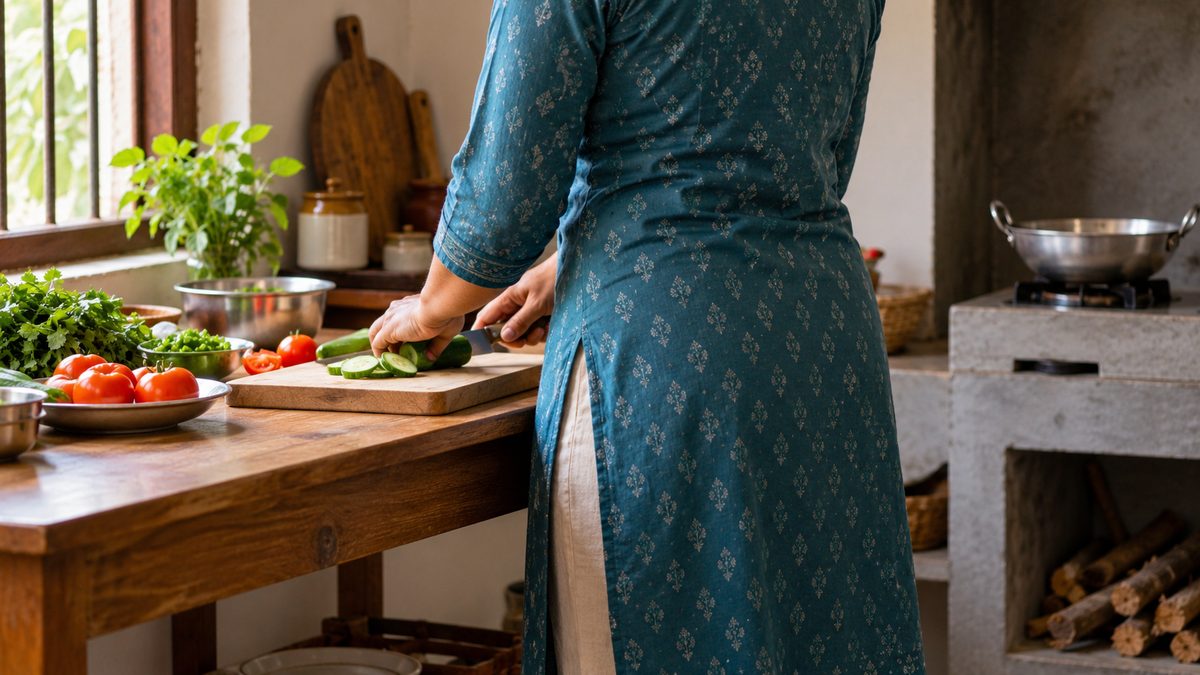
At a low counter or floor stove, reduce how long you stay bent forwards by moving preparation to a suitable surface and changing position between cooking stages. Do not raise or modify a stove with an improvised stand. Stability, ventilation and safe access to hot food come before a posture adjustment.
A low cooking area may be part of the kitchen layout, a family routine or a temporary arrangement. You may have little control over its height. There are still choices about where to chop, how to arrange utensils and when to move away from the heat.
Separate preparation height from stove height
Chopping vegetables, sorting ingredients and mixing can often happen at a different surface from cooking. Try a stable table or worktop where you can keep your shoulders relaxed and see the task without a sustained deep bend. Keep the board flat and prevent it from sliding.
For standing preparation, move close and check whether your elbows can stay near your body. If you have to reach across dishes, clear more space before changing your posture. A surface that works for someone else may be too low or high for you.
Do not stack loose boards, bricks or containers beneath a hob or burner. Changes to an appliance's mounting, fuel connection or clearance need the manufacturer's guidance and appropriate professional advice. A different preparation surface is a simpler adjustment than altering a heat source.
Arrange the cooking zone before lighting the stove
- Clear the way in and out. Remove bags, trailing fabric and loose mats so you can change position without stepping over things.
- Place utensils within easy reach. Keep them away from flames and hot handles, with a stable landing place for used spoons.
- Set aside a space for hot pans. Use an appropriate heat-resistant surface rather than your lap or a stool you need for support.
- Check the seat if you use one. It should be steady, clear of heat and at a height from which you can rise comfortably.
- Plan the transfer. Decide how food will reach the serving surface before lifting a filled pot.
Keep children and pets away from the hot zone. Ventilation requirements depend on the appliance and fuel, so follow the official instructions. Never bring equipment intended only for outdoor use into an enclosed kitchen to make the layout more convenient.
Choose a stance that lets you move
At a low counter, try moving one foot slightly forwards and bending comfortably through your hips and knees for brief tasks. Change feet or stand upright between stages. Do not force a deep squat, lock your knees or hold your breath to maintain a position.
For a floor stove, a steady low seat may be more tolerable than prolonged crouching for some people. It must leave enough clearance from hot surfaces, allow a clear view of the pan and let you rise without grabbing the appliance. If those conditions cannot be met, the arrangement needs reconsidering.
Kneeling and cross-legged sitting do not suit every knee, hip or ankle. Avoid forcing a traditional position because others find it comfortable. The floor sitting guidance explains how to assess access and getting up away from a hot cooking area.
Shorten the reach into the pan
Arrange the pan and utensils before cooking so repeated stirring does not mean leaning across another hot vessel. Follow the appliance instructions about pan size and placement. Turn handles away from passing people while keeping them out of flames and within safe reach.
A suitable utensil can reduce leaning, but an excessively long or heavy one may be harder to control. Test the movement with an empty, cool pan first. If you cannot stir or see the contents steadily from your chosen seat, change the arrangement before adding heat.
Avoid lifting a heavy pot directly from floor height to a high worktop. Where practical, use smaller quantities or have another capable person handle the transfer. Do not carry hot liquid while trying to stand from the floor. Our big-meal cooking advice covers workload and serving arrangements.
Build movement into the recipe
Use natural pauses, such as finishing preparation or waiting for a covered dish, to straighten up and change position when it is safe. Stay attentive to cooking; a movement break is not a reason to leave a flame unattended. Turn off the heat first if you need to leave.
Share stages of a long meal rather than giving one person every low-level task. Someone else might wash and prepare ingredients while you supervise a manageable part. Keeping frequently used items at accessible heights can also reduce repeated bending throughout the meal.
When cooking has finished, sit somewhere comfortable or take a gentle walk before tackling low cupboards and washing up. For other kitchen chores, see posture during household work. The aim is a varied day rather than a perfect pose beside the stove.
Stop cooking safely when pain changes
This is general information. If pain makes your hands or legs unsteady, switch off the heat safely and ask someone to take over. Seek prompt assessment for new weakness, fever with back pain, or severe or quickly worsening pain.
Bladder or bowel changes, loss of feeling around the genitals or bottom, or new symptoms in both legs need emergency care. Do not delay help to finish a meal. Read when back pain needs medical attention, and seek tailored advice if cooking repeatedly triggers symptoms.
Frequently asked questions
Would a thicker chopping board solve a low counter?
It may change preparation height slightly, but it must sit securely and remain suitable for food preparation. Do not create a tall stack that can slide while using a knife. If the task still requires a long bend, use a more suitable table instead.
Is sitting down to cook always easier on the back?
No. Sitting can increase reaching if the stove or ingredients are too far away. It also changes your view of hot pans and your ability to move clear. Judge the whole arrangement, including getting up, rather than assuming a seat makes it suitable.
Can a kitchen stool double as support when I stand up?
Only use support that is designed and stable enough for that purpose. A light stool can tip or slide when pulled sideways. If you cannot rise without grabbing the stove, choose another cooking arrangement and seek advice on suitable seating and transfers.
How can I help a relative who cannot change the kitchen?
Start by asking which stage is uncomfortable. Offer to do the lifting, move preparation to an existing table or divide the meal into shorter stages. If access to heat remains unsafe, practical home or occupational advice may identify changes beyond a posture cue.