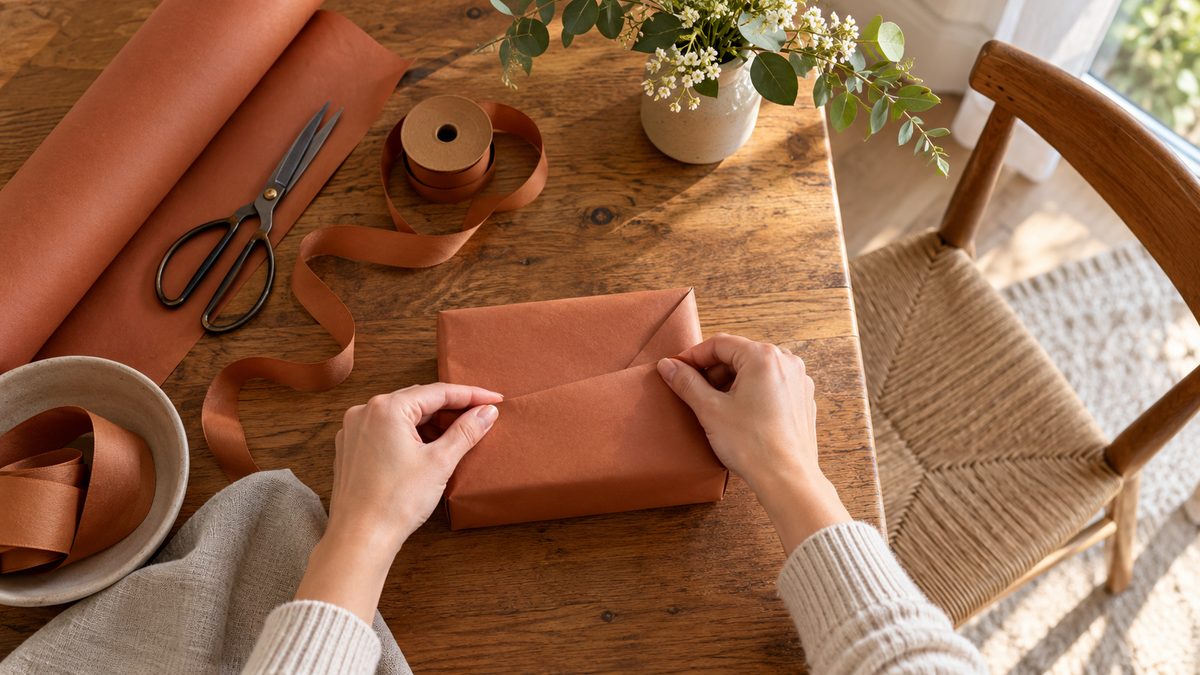
Wrap gifts at a table where you can see and reach the parcel without folding over it. If you prefer the floor or a low table, keep the session brief, vary your position and move to a higher surface when your back or knees become uncomfortable.
A floor covered in paper makes it tempting to stay planted until everything is finished. The problem is often the combination of leaning forwards, reaching sideways for tape and holding one position while completing a fiddly task. A little preparation makes those demands easier to change.
Build the wrapping station around the parcel
Start with the largest gift. It needs enough clear space to turn without forcing you to reach across the whole table. Move extra presents off the working surface and bring up one parcel at a time. Keep the near edge clear so you can sit close.
Choose a stable chair with your feet supported. Your shoulders should feel relaxed when your hands rest at the working height. If the table is high, raising the chair is only useful when your feet still have firm support. A dangling-foot position can make you slide forwards and lose back support.
Place tape, scissors, labels and a pen on your usual working side within easy reach. A small tray keeps them together when you change position. Keep sharp tools closed or covered when not in use, particularly around children.
Choose a surface for each stage of wrapping
| Stage | Practical setup | What to watch |
|---|---|---|
| Measuring and cutting paper | Clear a larger table area and move around the parcel | Do not stretch across scissors or loose paper |
| Folding and taping | Bring the working edge close and turn the parcel | Avoid keeping your back bent while searching for tape |
| Writing labels | Sit at a clear, well-lit surface | Move the label towards you rather than lowering your head |
| Wrapping an awkward object | Use a stable surface and consider simpler packaging | Do not balance a heavy object on your lap |
You can sit for detailed folds and stand for spreading paper, provided both positions are comfortable. Changing the task is a useful way to change posture without interrupting the whole session.
If the floor is the only available workspace
Clear a route to a stable chair before sitting down. Place a firm folded blanket under your pelvis if it makes the position easier, and support your back against a wall when possible. A cushion should stay in place rather than slide as you reach.
Keep the parcel directly in front of you. Move your whole sitting position around it rather than twisting from one fixed spot. Avoid trapping a foot underneath you or forcing your knees down to make a cross-legged position look symmetrical.
Try different comfortable arrangements, such as legs loosely crossed or one leg extended, and change sides before one area becomes sore. If sitting on the floor brings on tingling, stand up safely and change the setup. Our guide to supported floor sitting covers position choices and getting up.
A low table can be less useful than it appears if your knees do not fit underneath. Sitting at its edge while reaching past your legs may keep your back bent throughout. Test it with an empty box before committing to a pile of gifts.
Use the parcel as the reminder to move
After finishing a gift, set it aside, stand if safe and walk around the room. Check that paper offcuts are not under your feet before stepping away. When you return, reset the supplies rather than accepting the stretched-out arrangement left by the last parcel.
For many small gifts, split the work into batches and leave time between them. One batch could be cutting paper, another wrapping, and another writing labels at a different seat. The useful limit is when your comfort or concentration changes, not a rigid timer you must obey.
If you tend to lose track of time, use a gentle reminder to check your position. The guide to sitting breaks suggests simple prompts that can fit around hobbies and household jobs.
Make the wrapping simpler when space or comfort is limited
Reusable bags, a plain box or less elaborate ribbon work can reduce the amount of time spent bent over. This is a practical choice when several gifts still need finishing and your back is already uncomfortable. There is no requirement to finish every detail in one sitting.
Leave heavy gifts on a stable surface and wrap around them if you can reach safely. Ask for help turning an awkward item. Move completed gifts in small loads with a clear view of the floor; planning household lifts is relevant when the wrapping session ends with carrying boxes elsewhere.
Back symptoms that need more than a different wrapping position
This is general comfort guidance, not a diagnosis. Obtain prompt medical advice for numbness, weakness, fever, pain after a fall or injury, or pain that keeps getting worse. New loss of bladder or bowel control or numbness around the genitals or bottom needs emergency assessment, as can severe new leg weakness.
Use the back pain medical warning signs guide if you are unsure what to do next. Persistent pain during ordinary seated tasks also deserves an individual assessment.
Frequently asked questions
Is it safe to wrap presents while sitting on my bed?
A soft mattress may make it difficult to sit steadily and reach the parcel. Try a firmer work surface first. Keep scissors and small parts out of bedding, where they can be missed when you finish.
Can children help without sitting on the floor?
Give them a stable seat and an age-appropriate task at a clear table, such as choosing labels. Keep sharp tools and small decorations under adult control. Leave enough space that nobody needs to reach across another person.
Should I hold my stomach tight while wrapping?
You do not need to brace continuously for a light seated task. Breathe normally, use back support if comfortable and change position. If you feel you must tense constantly to tolerate sitting, alter the setup and consider professional advice.
Why do my wrists ache before my back?
Repeated cutting and tight gripping can become uncomfortable. Put the task down, vary what you are doing and avoid forcing stiff scissors. Persistent hand pain or numbness needs advice rather than simply changing your back posture.