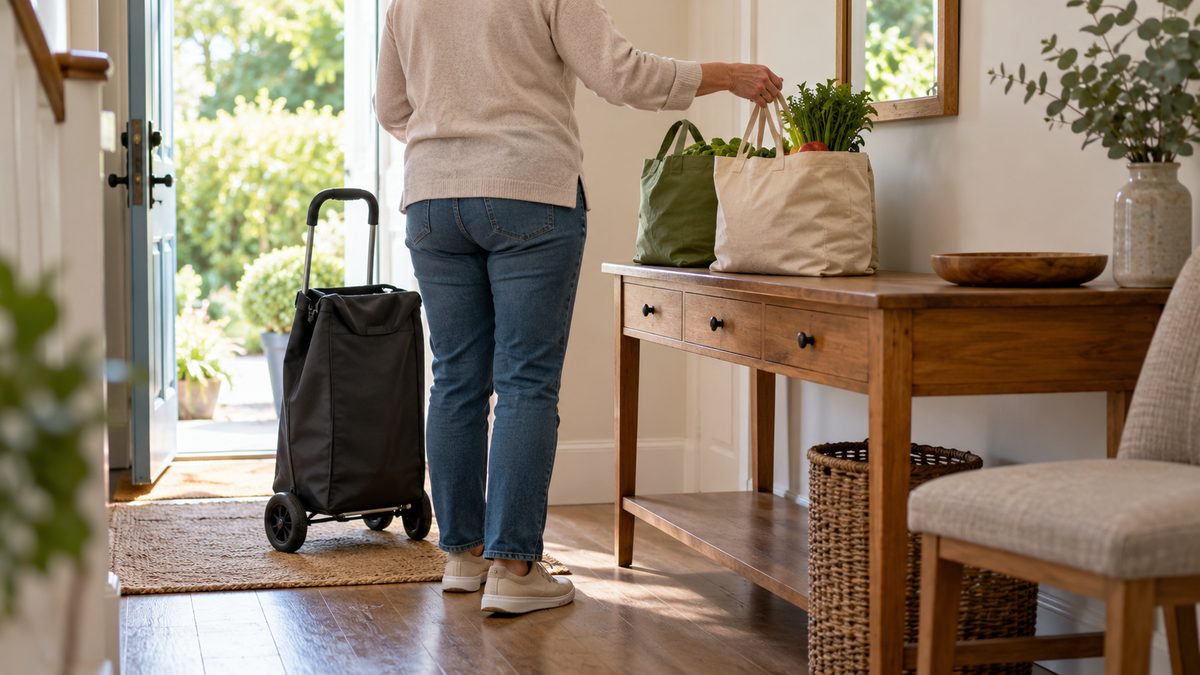
Make holiday shopping more manageable by carrying less at once, planning places to rest and using a suitable trolley when it helps. Divide a long list into smaller trips rather than treating every purchase as a reason to carry more. Walking, queuing and lifting all contribute to the effort of the day.
A bag may feel light when you leave the first shop and awkward by the last one. Crowded aisles, escalators and distant parking make it harder to change your plan once tired. Decide how purchases will get home before deciding how much to buy.
Plan a route with a way to stop early
Group nearby shops together and identify somewhere you can sit without having to walk far out of your way. Put essential errands first, with optional browsing later. Check access and transport information from the venue or operator if steps, distances or carrying restrictions may affect you.
Consider the return journey as well as arriving empty-handed. A short walk to the shops can become difficult with bulky parcels. Use smaller trips, a companion or a delivery arrangement where available and suitable, rather than relying on being able to manage everything at the end.
Wear familiar shoes that stay secure and suit the ground conditions. Take only what you need in your everyday bag so purchases do not add to an already heavy load. The footwear advice explains why fit and stability matter more than a label.
Choose a carrying method before the bags multiply
| Option | Useful check | Potential difficulty |
|---|---|---|
| Handheld bags | Can you grip them without leaning or rushing? | Thin handles dig in as the load grows |
| Backpack | Does it sit securely with straps adjusted comfortably? | Overfilling adds weight even when hands are free |
| Shopping trolley | Do wheels turn freely and the handle suit your reach? | Steps and crowded transport can require lifting |
| Store trolley | Can you steer it and see the route ahead? | A sticking wheel makes turns harder |
| Collection or delivery | Can the handover and unloading be managed? | A large combined order still needs handling at home |
There is no universal safe bag weight for every shopper. Use control and comfort as practical checks, and follow any restrictions from your clinician. If you have to lean, lose your grip or cannot set the load down steadily, reduce it.
Keep bags close and change the load itself
Keep manageable bags near your sides rather than holding them away from your body. Sharing a light load between hands may feel more comfortable than hanging everything from one shoulder, but it does not reduce the total weight. Do not split an excessive load merely to make it look balanced.
For a backpack, use both straps if that is comfortable and keep items from shifting. Avoid filling it simply because there is room. If you already use a mobility aid, ask about suitable carrying arrangements rather than hanging heavy bags where they could affect its stability.
Put bags down in a safe place during pauses instead of holding them through every conversation. Keep them out of walking routes and retain control of your belongings. For more on load choices, see heavy bags and back discomfort.
Use a trolley where the whole route suits it
Choose a trolley that rolls and turns freely before loading it. Move close to the handle and use a comfortable grip, avoiding a long forward reach. If a store trolley keeps pulling sideways, exchange it rather than fighting it through the shop.
Do not stack items so high that they block your view. Follow venue instructions for lifts, ramps and trolley use, and avoid taking a trolley onto an escalator. Check the route before committing to a load that you would need to lift over steps.
A personal shopping trolley may reduce carrying along a level route, but it still needs handling at kerbs, transport entrances and home. Think through those points with the trolley empty. Arrange help or reduce the order if any transfer would be beyond your control.
Break up queues and walking before fatigue builds
While queuing, let your stance vary and keep your knees relaxed. Take a small step or shift weight when space allows. Do not lean on display shelves, stacked boxes or a trolley that could roll away. If you need a seat, ask staff about a suitable waiting arrangement.
Use a seated break between sections of the trip, with your bags supported rather than held on your lap throughout. Have a drink when needed and reassess the list. Skipping an optional shop can be a useful decision if your return journey still involves walking and carrying.
Walking is a useful everyday activity for many people, but a shopping day need not become a distance challenge. Our walking and back health guide discusses adapting activity. For an outing followed by a reception or celebration, plan the extra standing too.
Unload in stages when you get home
Set purchases down somewhere accessible rather than leaving every bag on the floor to sort. Move smaller amounts to cupboards, keeping clear routes through the room. If using a car, bring each manageable bag near the boot opening before lifting when you can do so safely.
Bulky purchases deserve a separate plan. Do not turn a comfortable trip into an awkward final lift because the shopping is almost finished. The car boot and luggage handling advice covers reaching into a loaded boot.
When to leave the shopping and get advice
This article provides general information. Stop carrying if pain, numbness or weakness affects your control. Seek prompt medical advice for fever with back pain, new weakness or severe, rapidly worsening symptoms, and urgent assessment after a serious fall.
New bladder or bowel changes, numbness around the genitals or bottom, or symptoms affecting both legs need emergency care. See when to see a doctor for back pain. Repeated pain during ordinary errands also merits assessment rather than continually working around it.
Frequently asked questions
Is online shopping always easier for someone with back pain?
It can remove some walking and carrying, but delivery still involves receiving, opening and storing parcels. Consider access at the door and ask about handling options for heavy items before ordering. A large box left at floor level can create a different difficulty.
Can I hang shopping bags from a pushchair?
Follow the pushchair manufacturer's instructions about storage and load placement. Hanging bags from handles can affect stability. Use the intended storage only within its stated limits and reduce the shopping if you cannot transport it without changing how the pushchair handles.
Should I keep shopping if my back feels better once I walk?
Feeling more comfortable with movement does not mean you need to finish the entire list. Check how much carrying and queuing remain, and preserve a manageable route home. Stop and seek advice if pain returns strongly or new symptoms develop.
What can I say when a shop assistant packs a bag too heavily?
Ask for the contents to be divided or for a bulky item to stay separate. Then reassess the total load before leaving. Extra bags help only if you can carry or transport the combined weight comfortably, so collecting the remainder later may be preferable.