Audit what travels with you
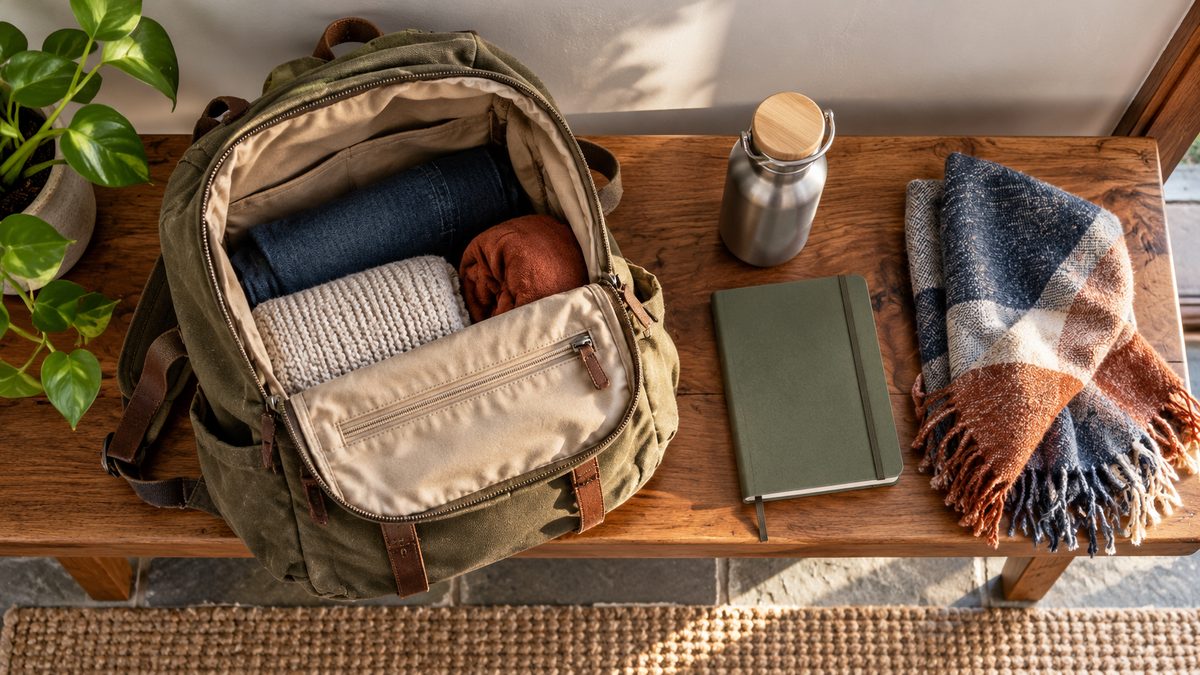
Empty the bag onto a table and sort the contents by when you last used them. Spare chargers, old notebooks, full water bottles and items kept for unlikely situations can accumulate quietly. Keep what your day requires and look for items you can leave securely at work, school or another regular destination. A small change repeated on every commute can matter more than a new bag with the same contents.
Think about the return journey before leaving home. Groceries, sports clothing or borrowed books may make the evening load much larger. Pack a separate plan for those items, such as a smaller shopping trip or delivery for bulky purchases. If the bag feels difficult before you have reached the gate, do not assume you only need to get used to carrying it.
Fit a backpack for the body using it
Use both shoulder straps and adjust them so the pack sits securely without hanging far away from your back. Straps should feel comfortable rather than digging into the neck or leaving your arms awkwardly restricted. Place denser items near your back and stop rigid corners from pressing through the panel. Keep the load from swinging as you walk.
A chest or waist strap may improve stability on some designs, but it needs to fit comfortably and suit the task. Extra straps cannot make an excessive load disappear. Try the bag with realistic contents when choosing it, and check that you can put it on and remove it without a sudden wrenching movement. A smaller bag can discourage overpacking, though it still needs enough room for essentials.
Match the bag to the route
A shoulder bag might suit a brief journey with a few light items. A backpack may be more comfortable for a longer walk when both straps fit well. A wheeled bag can be useful on smooth surfaces, but pulling it over broken paving or carrying it up station stairs introduces different demands. Choose around the whole journey, including crowded vehicles and storage spaces.
At a bus stop or train platform, put the bag down safely if waiting becomes lengthy. Keep it clear of walking routes and avoid balancing it on one shoulder while scrolling. If you regularly travel between cities, read posture during flights and train journeys. The time spent standing, boarding and waiting can be as relevant as the time spent walking.
Lift and remove the bag deliberately
Bring a loaded bag to a stable surface if possible before putting it on. Avoid swinging it quickly from the floor onto one shoulder, particularly in a cramped space. When taking it off, use both hands if that helps keep control and set it down without twisting towards a distant chair. A laptop deserves careful handling, but so do your shoulders and back.
A bag that needs a forceful heave is a prompt to remove something or change how it travels. The everyday lifting guide explains how to clear a route and plan a landing place. Those decisions also apply when placing luggage in a car boot or lifting a school bag onto a hook above shoulder height.
Plan for study and work equipment
Ask which books or devices need to travel each day. A timetable, shared office charger or secure locker may remove repeated carrying. Digital access can reduce paper weight where it is available and practical, but a laptop can itself be a substantial item. Do not add equipment to solve a desk problem without considering how it reaches that desk.
Students can review the packing list with a parent, carer or school staff member when loads are difficult to manage. Our study posture article covers the workstation at the other end of the journey. For home workers who travel occasionally, laptop setup adjustments can help distinguish portable essentials from items that should stay on a permanent desk.
Use a before-you-leave checklist
A bag check takes less effort when it follows a consistent order: contents first, fit second, route third. Use the list below before a longer commute or a day that includes shopping. Recheck after adding items rather than assuming the morning adjustment will still fit.
- Remove items that have no clear use today.
- Keep heavier contents stable and close to your back.
- Check that straps do not dig in or slide off.
- Plan how to manage stairs and crowded transport.
- Leave room for what the return journey may add.
Think about storage at the destination as part of the plan. A bag left on the floor under a crowded desk may require an awkward reach every time you need a notebook. Put it somewhere stable and accessible without creating a trip hazard. Take out the items you will use during the next block of work so you are not repeatedly pulling the whole bag towards you. A lighter carrying routine works best when packing, travelling and unpacking all become easier.
Respond to discomfort without guessing a diagnosis
If your bag repeatedly feels uncomfortable, reduce the contents and shorten the carrying period before buying accessories. Check for a strap that slips, an edge pressing against you or a load that shifts to one side. A temporary change in bag choice can help you observe the task, but it cannot tell you the medical cause of pain.
Pain that persists, worsens or limits usual activities deserves advice from a doctor or physiotherapist. New numbness, weakness or other concerning symptoms should not be dismissed as a bag problem. See when back pain needs medical attention. Once carrying feels manageable, a comfortable walking routine can make the journey more enjoyable without turning the commute into a test of endurance.