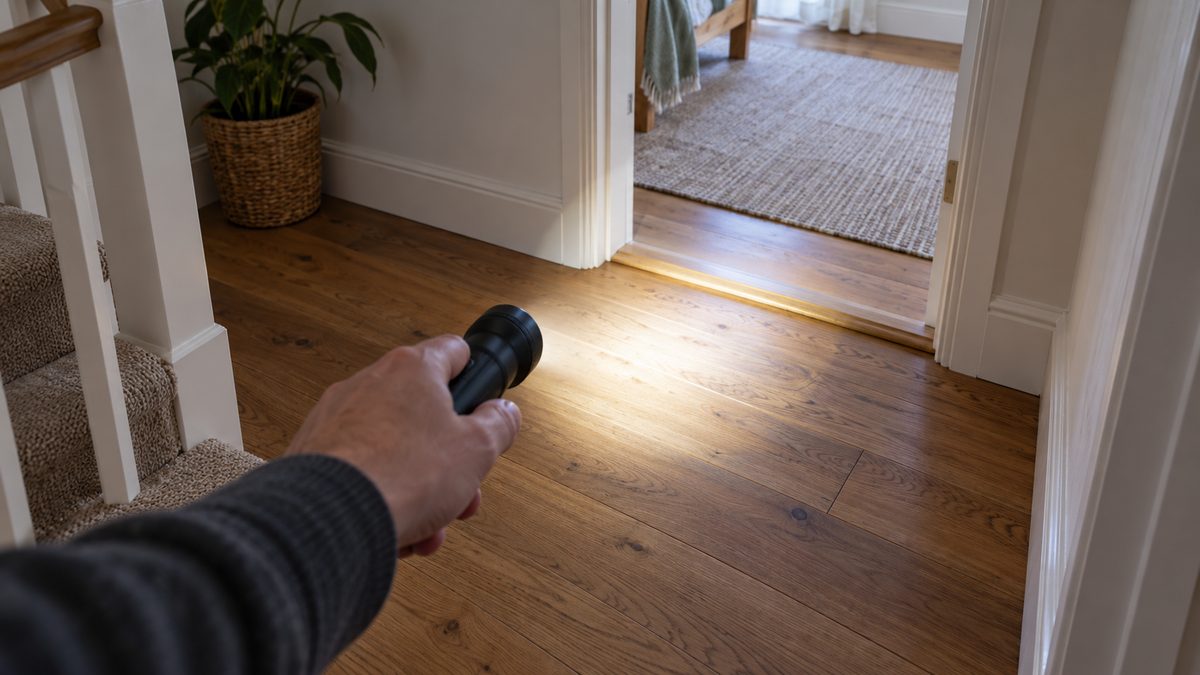
Move around during a power cut by lighting the floor ahead with a torch, keeping routes clear and taking one task at a time. Keep a hand free for a secure stair rail, and avoid walking with a lit candle.
A familiar room can become difficult when a loose rug, pet or open cupboard is hidden in shadow. The aim is to see where your feet will land without rushing, carrying awkward loads or trying to hold your back rigid.
Pause where you are before finding a torch
Stop moving when the lights go out. If you are already seated, stay there while you locate a light within reach. Call to other people so nobody starts searching across the same dark hallway. Ask children to wait in a known safe place.
If you use a phone light temporarily, hold it so the beam reaches the floor rather than shining into your eyes. Move to a proper torch when one is available. Do not cross a cluttered room simply to retrieve something that can wait.
Keep frequently needed items together at an accessible height: torch, glasses, phone and essential medication. Check torch batteries before they are needed. Avoid storing the only light on a high shelf that requires a stool.
Light the route before carrying anything
Choose the shortest clear route to a useful destination, such as a chair or toilet. Sweep the light across thresholds, cables and floor edges before stepping. Let your eyes adjust when moving between a bright torch beam and a darker room.
Put down laundry, shopping and drinks until you have checked the route. Carrying a basket against your chest can hide the floor even when the torch works well. Smaller loads are easier to manage, as discussed in planning everyday household chores.
Ask another adult to light the way if you need both hands for a walking aid. Do not leave your usual aid behind just to carry a torch. If moving alone is unsafe, stay in a secure place and call for assistance.
A room-by-room check for hidden obstacles
| Place | Check with the light | Useful action |
|---|---|---|
| Hallway | Shoes, bags and trailing leads | Clear the walking line once you can see it |
| Living room | Low tables, pets and loose rugs | Use a familiar open route around furniture |
| Kitchen | Spills and open cupboard doors | Close doors and deal with wet patches before walking through |
| Bathroom | Wet tiles and shifting mats | Place the torch securely away from water |
| Doorway | A raised threshold or change in floor level | Illuminate both sides before stepping across |
Do not rearrange heavy furniture in the dark. Move only small obstacles you can handle safely, and avoid leaving them beside the next doorway. A clear route is more useful than trying to tidy the whole house.
Keep the stair rail available to your hand
If the journey upstairs can wait, postpone it. Before using stairs, light the steps and both landings. Check for objects on the treads and make sure your footwear stays securely on your feet. Loose slippers can make a careful step less reliable.
Use the handrail and move at a pace you can control. Keep the torch in the other hand, pointing towards the next steps without obscuring them. A suitable head torch may leave your hands free, but check its direction before starting.
Do not combine stairs with carrying a child, hot drink or full laundry basket when that prevents you seeing or using the rail. Arrange help or split the task. If you need both rails or hands for balance, have someone provide lighting rather than changing your normal stair method.
New difficulty judging steps or repeated near falls deserves attention beyond the outage. The daily posture and mobility advice for older adults covers adapting activities when support needs change.
Use battery lighting instead of moving a flame
A torch or battery lantern avoids the need to walk while balancing a naked flame. If candles are already in use, keep them in stable holders on a level, heat-resistant surface, away from curtains, bedding, children and pets. Never leave them unattended.
Extinguish a candle before moving it, and allow its holder and wax to cool. Do not place a candle on the stairs or use it to search inside cupboards. Keep the escape route free of both candles and objects used to support them.
Do not bring outdoor cooking equipment or a generator indoors for light or warmth. Follow official local advice for the outage and the equipment instructions. If the home cannot be used safely, arrange assistance instead of improvising with flames or fuel-burning equipment.
After a stumble, decide what needs help
Stop and get your bearings after a near fall. Sit somewhere secure if you feel shaken or dizzy. Do not immediately repeat the same trip carrying more items. Once lighting returns, check the cause while it is still easy to identify.
After a fall, avoid rushing to stand. Call for help if you cannot get up safely, have severe pain or may have injured your head, hip or back. New back pain with weakness, numbness around the genitals or bottom, or bladder or bowel changes needs emergency assessment.
This is general home-safety guidance. For persistent or worsening symptoms, read when to see a doctor for back pain and seek appropriate medical advice.
Questions about getting around without mains lighting
Should I keep my shoes on if the outage happens at night?
Use footwear that stays on securely and grips your floor. Keep a suitable pair beside the bed if you may need to get up. Avoid walking in loose footwear or slippery socks.
What if I am in a lift when the power fails?
Use the alarm or emergency communication system and follow the building response instructions. Do not force the doors or attempt to climb out. Tell responders if someone needs urgent medical help.
What if my phone is my only light?
Use it for essential movement and keep it available for calls. Avoid balancing it on unstable objects. Once safely settled, ask someone for a torch rather than searching through distant rooms.
Should someone check on a neighbour who lives alone?
Contact them by phone first if possible. Ask what help they need rather than assuming they can manage stairs or reach their supplies. Do not enter a dark property or attempt a lift that you cannot manage safely.