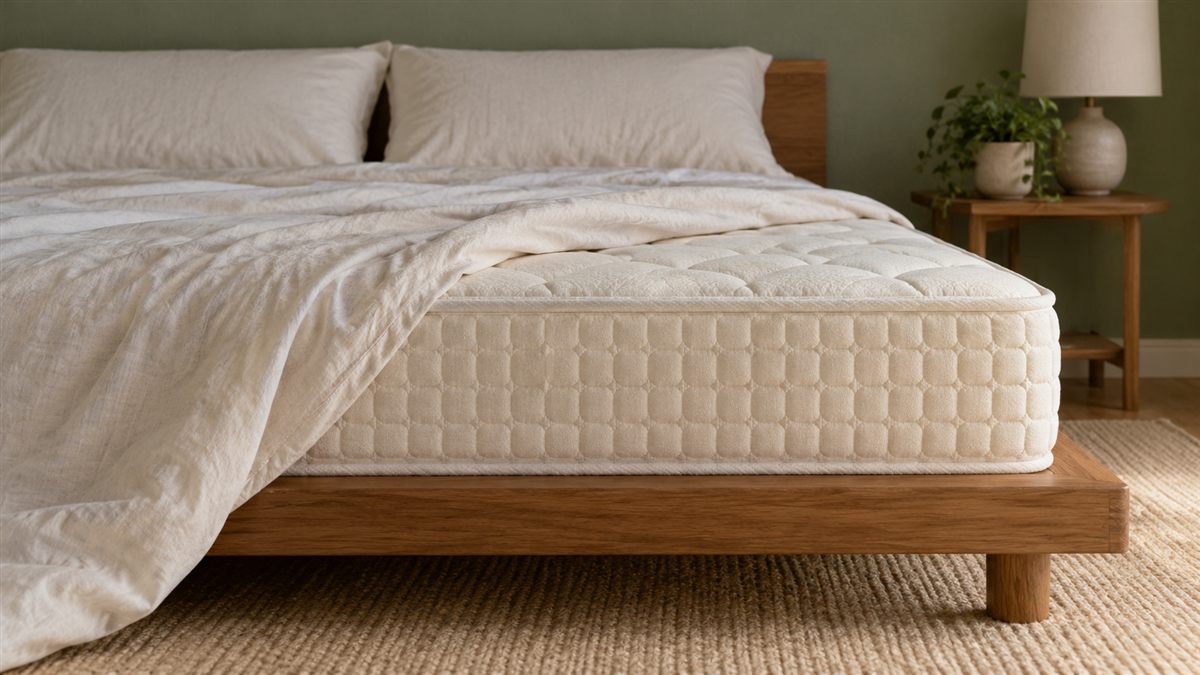
Firmness describes how a mattress feels when you lie on it. Support describes how the bed carries your body over time. The two overlap, but they are not identical. A hard surface can feel unsupportive in the gaps beneath you, while a softer surface can feel comfortable if it does not let you sink awkwardly.
Shopping becomes easier when you replace the question about the best firmness with a more useful one: can you rest comfortably in your normal positions? Body size, sleeping style, pillow choice and personal preference all matter. No mattress label can predict the answer for every reader.
Separate pressure relief from sinking
Your shoulders, hips and other contact points need tolerable pressure. When a surface feels too hard, you may keep turning because one area becomes sore. When it feels too soft, changing position may require effort or leave you resting in a hollow. Neither sensation proves damage, but both are useful feedback about fit.
On your side, notice whether the shoulder can settle without your trunk dropping into a deep bend. On your back, notice whether support feels distributed rather than concentrated at the pelvis. You do not need to hold your body stiffly to test alignment. Relax as you would when preparing for sleep.
Understand the limits of firmness labels
Terms such as soft, medium firm and extra firm vary between manufacturers. A number on one company's scale may not match another company's number. Materials also respond differently to warmth and time under load. A quick press with your hand tells you much less than lying down in your usual sleeping position.
A higher price does not prove a better match. Extra layers, cooling claims and complicated construction names can make comparison harder. Ask what the mattress feels like after sustained use, how its support is maintained, and what the seller allows if it is uncomfortable. Focus on practical information rather than a promise of perfect posture.
Check the base before blaming the mattress
A damaged bed frame, bowed slats or unsuitable support can change how a mattress behaves. Look for loose fittings and obvious unevenness. Check the manufacturer's requirements for the base and spacing of slats. A mattress designed for one type of foundation may not work as intended on another.
Visible hollows or a persistent roll towards the centre are reasons to inspect the whole bed. A topper may soften a firm surface, but it does not rebuild worn internal support. Rotating a mattress is appropriate only when its care instructions permit it. Some models have a designated sleeping side and must not be flipped.
Use a realistic trial checklist
- Lie in the position you use most often rather than sitting only on the edge.
- Bring your usual pillow or test a similar height so neck support is comparable.
- Roll from side to back and check whether movement feels manageable.
- Notice pressure at shoulders and hips after settling, not just the first impression.
- Check edge stability if you use the edge while dressing or getting up.
- Ask about trial length, return costs, collection arrangements and hygiene conditions.
- Confirm the mattress fits the bed, stairs and doorway before arranging delivery.
A showroom trial cannot reproduce several nights of sleep. If a home trial is available, read its terms before purchase. Keep packaging and records when the policy requires them. A practical return route matters more than reassurance that every customer eventually adapts.
Give a change a fair but comfortable review
A different sleeping surface can feel unfamiliar. Track a few useful observations: how easily you settle, whether pressure wakes you, and how you feel getting up. A short note is enough. Do not keep tolerating worsening pain solely to complete an advertised adjustment period.
Keep other changes modest during the trial. Replacing the pillow, adding a thick topper and changing your sleeping position together makes comparison confusing. The sleeping posture and pillow guide explains why mattress sink changes the pillow height you may need. Adjust one element after checking the basic bed setup.
Discuss shared-bed needs directly
Partners can prefer different firmness levels or have different mobility needs. Compare how each person feels rather than assuming the heavier person should choose for both. Some beds offer separate comfort options, but check whether those create an uncomfortable join or limit returns. Try getting into and out of the bed as well as lying still.
Temperature, noise and movement transfer can disturb rest even when support feels comfortable. Bedding and room conditions deserve attention too. If one person has persistent pain, another purchase may not address the issue. An individual assessment can help separate comfort preferences from symptoms that need clinical attention.
Put the bed in the wider picture
A mattress is one part of a day that also includes sitting, walking and carrying. If mornings feel stiff, use the gentle morning back routine to begin moving at a comfortable pace. The walking guide offers another way to add ordinary movement without making the bed responsible for every symptom.
Arrange medical advice if back pain continues, worsens or interrupts daily activities. Read when to see a doctor for back pain for warning signs that require faster help. New bladder or bowel changes, saddle numbness or developing leg weakness require emergency assessment, regardless of the mattress you use.
Choose a bed you can use comfortably and review honestly against your own needs. A clear trial policy, suitable base and realistic expectations provide a better decision process than chasing a universal firmness score.